
No products added!
September 15, 2026

Written by
Saf O' Me
Personal Alarm for Elderly: What Families Should Know Before Choosing One
Before you compare devices, take our free 60-second personal alarm check. When an older family member chooses to live independently, it is natural for their family to think about what would happen if something went wrong when nobody else was around. A fall in the bathroom, a sudden medical issue or simply being unable to reach the phone can quickly become a serious situation.
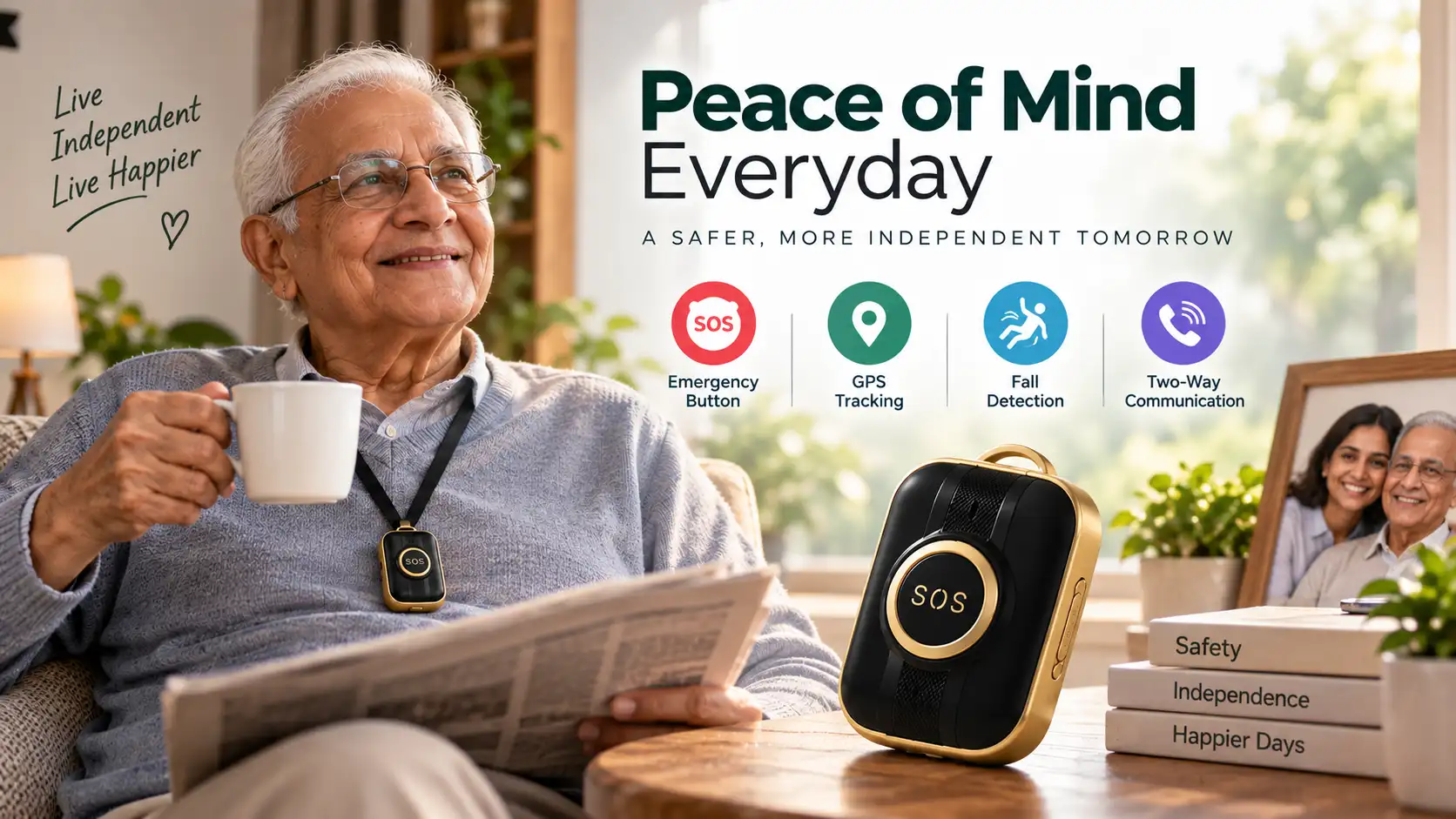
A personal alarm for elderly people can provide an extra way to call for help when it is needed. Depending on the device, it may include an emergency button, two-way communication, GPS location tracking or fall detection.
But choosing one should not come down to buying a device with the longest list of features. Families need to consider how the alarm works, where it can be used and, most importantly, whether the older person will actually feel comfortable wearing and using it.
What Is a Personal Alarm for Elderly People?
A personal alarm is a small safety device that allows an older person to alert someone when they need assistance. It may be worn around the neck, on the wrist, attached to clothing or carried in a pocket.
Basic alarms usually have an emergency button. When the button is pressed, the device sends an alert to a nominated contact or monitoring service. More advanced devices can add features such as GPS positioning, two-way voice communication and automatic fall detection.
A personal alarm for elderly family members should be viewed as an additional safety measure, rather than a replacement for emergency services or medical care. Its purpose is to make it easier to request assistance when a normal phone call may not be practical.
How Personal Alarms Work for Elderly People
Understanding how personal alarms work for elderly users can help families choose a device that suits the person’s circumstances.
The basic process is straightforward:
-
- The person activates the alarm, or the device detects a possible emergency.
-
- An alert is sent using the device’s available communication network.
-
- The alert reaches a nominated family member, carer or monitoring service.
-
- If the device supports two-way communication, the person may be able to speak with the recipient.
-
- The recipient can then decide what assistance is appropriate.
The technology behind each device can vary considerably. Some alarms rely on a mobile network, while others use a home base unit or another form of connection.
Families should therefore check where the device is designed to operate. A device that works well inside the home may not necessarily provide the same functionality when the person is out walking, shopping or visiting friends.
Personal Alarm for Elderly Living Alone
A personal alarm for elderly living alone can be particularly useful because there may be nobody nearby to notice that something has happened.
For example, imagine an older person falls in the bathroom and cannot get back on their feet. If their mobile is sitting on the kitchen bench, making a phone call may be impossible. A wearable alarm can keep an emergency control within reach.
This does not mean every older person living alone needs the same type of alarm. Someone who spends most of their time at home may have different requirements from someone who regularly goes out independently.
Families should consider the person’s normal routine, mobility, confidence with technology and the places they spend time.
The most sophisticated device is not automatically the best option. A safety device only helps when the person is willing and able to use it.
Types of Personal Alarms for Elderly People
There are several types of personal alarms for elderly users, with different features and limitations.
Button-Based Personal Alarms
These alarms allow the user to press a button when they need assistance. They are relatively simple and can be suitable for people who can recognise an emergency and physically activate the device.
The limitation is that the person must be wearing or carrying the alarm and able to press the button.
Elderly Fall Detection Alarm
An elderly fall detection alarm uses sensors to identify movement patterns that may indicate a fall. These sensors can include accelerometers and gyroscopes, which measure movement, acceleration and orientation.
If the device identifies a movement pattern that meets its detection criteria, it may automatically trigger an alert.
However, fall detection should not be treated as foolproof. Not every fall produces the same movement pattern, and unusual movements can sometimes result in false alerts. It is an additional layer of protection, not a guarantee that every incident will be detected.
GPS-Enabled Personal Alarms
GPS-enabled devices are designed for people who spend time outside the home. Location information can help nominated contacts understand where the person is when an alert occurs.
This can be particularly useful for an older person who regularly goes for walks, visits local shops or travels independently.
GPS accuracy can vary depending on the surroundings. Buildings, underground areas and other environmental factors can affect positioning, so families should understand the device’s actual capabilities rather than assuming GPS always provides an exact location.
Two-Way Communication Devices
Some alarms include a built-in microphone and speaker, allowing the user to communicate with a family member or monitoring service.
This can be useful during an emergency because the person does not necessarily need to reach a separate mobile to explain what has happened.
Two-way communication can also help the person receiving the alert understand the situation and determine what support is required.
What Should Families Look For?
When comparing a personal alarm for elderly family members, focus on practical features rather than simply counting specifications.
Ease of use: The controls should be simple enough for the person to understand, particularly during a stressful situation.
Comfort: If the device is uncomfortable or inconvenient, the person may stop wearing it. Consider whether a wrist-worn, pendant or portable design suits their routine.
Connectivity: Find out whether the device requires mobile coverage, Wi-Fi, a home base station or another connection.
Battery life: A safety device is of limited use if its battery is flat. Consider how often it needs charging and whether the person can manage the charging routine themselves.
Water resistance: Falls can happen in bathrooms, so check the manufacturer’s stated water-resistance rating and whether the device is suitable for the conditions in which it will be used.
Location features: If outdoor independence is important, understand how the device determines and shares location information.
Emergency contacts: Everyone nominated to receive an alert should understand what the alert means and what they are expected to do.
Where Does a Kid-Safety Device Fit In?
Connected safety technology is not limited to older people. Devices designed for children can also use technologies such as GPS tracking, location sharing and two-way communication.
For example, Saf O’ Me S7 Mini is a kid-safety product. While technologies used in children’s safety devices can be relevant to the wider discussion around connected personal safety, families should not automatically assume that a kid-focused device is suitable for an older person.
The requirements can be quite different. An older person may place greater importance on simple emergency activation, fall detection, comfortable wearability, loud two-way communication or compatibility with their daily routine.
The right approach is to assess the person’s actual needs first and then look at which technology can support them.
Common Mistakes Families Should Avoid
One common mistake is choosing an alarm based purely on the number of features it offers. More technology does not necessarily mean better safety if the user finds the device confusing.
Another mistake is assuming that GPS provides perfectly precise location information everywhere. Positioning technology has limitations, particularly indoors and in areas where signals can be obstructed.
Families should also avoid relying entirely on automatic fall detection. Even when a device includes fall detection, having a manual emergency button and clear emergency contacts can provide another way to request help.
Most importantly, the family should agree on what happens after an alert is received. A safety device works best when everyone involved understands their role.
A Personal Alarm Is Only One Part of the Safety Plan
A personal alarm for elderly living alone can provide an additional layer of reassurance, but it should not be the only safety measure in place.
Regular check-ins, accessible emergency contact details, suitable home safety measures and a clear plan for responding to an emergency can all work alongside the device.
Before choosing one, families should ask a simple question: Will this device genuinely fit into the person’s everyday life?
Understanding how personal alarms work for elderly users, comparing the different types of personal alarms for elderly, and considering the person’s routine can make the decision much easier.
The goal is not to find the device with the most impressive specifications. It is to find a practical safety solution that an older person can comfortably wear, understand and rely on when they need help.